ESP32 Home Assistant Bluetooth Proxy: What the Sources Cover
What is an ESP32 Home Assistant Bluetooth proxy?
If you searched for "esp32 home assistant bluetooth proxy", you are most likely trying to extend Home Assistant's Bluetooth reach using a cheap ESP32 board. That is a popular use of the chip, but it is important to be upfront: the sources available for this article are Espressif's ESP-IDF documentation on Bluetooth LE Audio, and they do not mention Home Assistant, a Bluetooth proxy role, or any firmware that implements one.
Because this site only publishes facts that come from verified sources, this article does not list proxy firmware names, YAML configuration, flashing commands, or device limits. Instead, it covers what the sources do establish about ESP32 Bluetooth LE in ESP-IDF, clarifies a few terms that are easy to confuse with "proxy", and points you to related guides on esp32.diy that cover BLE scanning and Home Assistant integration in more depth.
 \2
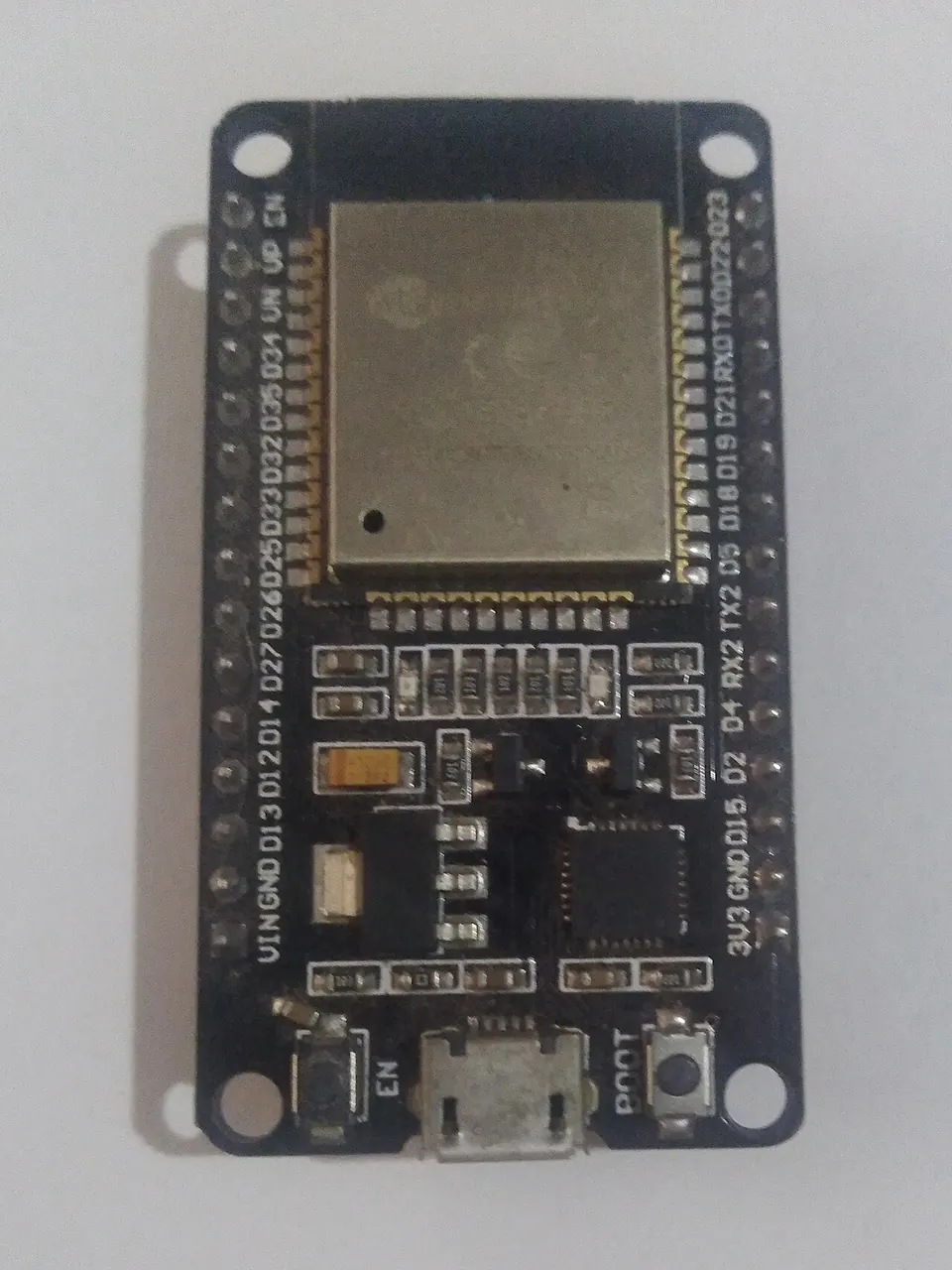
A typical ESP32 development board, the kind of hardware used for BLE projects. Image: Edwiyanto, CC BY-SA 4.0, via Wikimedia Commons
What do the sources actually say about ESP32 Bluetooth?
Both sources describe the Bluetooth LE Audio side of ESP-IDF, Espressif's official development framework. The key facts are:
| Fact | Detail from sources |
|---|---|
| Component | ESP-BLE-AUDIO provides APIs for Bluetooth LE Audio |
| Transport | LE Isochronous Channels (CIS and BIS), exposed by ESP-BLE-ISO |
| Codec | LC3, which the spec positions as better quality at lower bitrates than SBC |
| Spec version | LE Audio was introduced in Bluetooth Core Specification 5.2 |
| Release status | Preview; APIs, data structures and parameters may change |
The stack is organized in three tiers: the transport (isochronous channels for audio data, ACL/GATT for profile control, periodic advertising for broadcast announcements), the Generic Audio Framework (GAF), and use-case profiles such as HAP, TMAP, GMAP and PBP that sit on top.
None of this is the Bluetooth proxy function Home Assistant users are after. It does, however, confirm that the ESP32 family is treated by Espressif as a capable BLE platform with an actively developed host stack.
 \2
Espressif ESP-WROOM-32 module, which provides the ESP32's Wi-Fi and Bluetooth radio. Image: Brian Krent, CC BY-SA 4.0, via Wikimedia Commons
Is Bluetooth LE Audio the same thing as a Bluetooth proxy?
No. The naming overlaps enough to cause confusion, so it is worth separating the concepts.
In the LE Audio sources, a few roles sound proxy-like:
- Broadcast Assistant scans for Broadcast Sources on behalf of a low-power Scan Delegator and writes what it finds into the delegator's BASS service.
- Media Proxy is listed as a media proxy service component borrowed from the Zephyr implementation, and the sources note it is not a Bluetooth SIG specification.
These are audio-streaming concepts: one device offloads scanning for broadcast audio, another exposes media controls. They have nothing to do with forwarding BLE advertisements or connections from sensors to a home automation server over Wi-Fi. If you build a Home Assistant proxy, you will not be using BAP, CAP or LC3 at all.
The practical takeaway is simply that "proxy" and "assistant" in Bluetooth documentation do not automatically mean what they mean in the Home Assistant ecosystem.
How do I get started with an ESP32 Bluetooth proxy for Home Assistant?
The sources do not provide a getting-started path for a Home Assistant Bluetooth proxy, so no step-by-step instructions, commands or configuration are given here. Writing them from memory would break this site's rule against unverified content.
What the sources do offer is a set of ESP-IDF example projects for BLE Audio roles, located under bluetooth/esp_ble_audio/ in the ESP-IDF tree:
| Example path | Role |
|---|---|
bap/broadcast_assistant |
Scans for a broadcast source and adds it to a Scan Delegator over BASS |
bap/broadcast_sink |
Synchronizes to a broadcast source and receives BIS audio |
bap/broadcast_source |
Creates a BIG and sends broadcast audio over BIS |
bap/unicast_client |
Discovers a unicast server and sets up BAP unicast streams |
bap/unicast_server |
Advertises, accepts unicast connections and serves streams |
cap/acceptor, cap/initiator, cap/handover |
CAP roles for unicast and broadcast flows |
tmap/bmr, tmap/bms, tmap/central, tmap/peripheral |
TMAP media and telephony roles |
These are useful if your real goal is BLE audio on ESP32. For the Home Assistant proxy use case, start with the related guides linked below, which cover BLE scanning on ESP32 and Home Assistant integration from verified sources.
What are the common pitfalls?
Limited to what the sources support:
- Expecting LE Audio APIs to be stable. ESP-BLE-AUDIO is explicitly a preview release. The documentation warns that types may be renamed or restructured, function signatures changed, and fields removed without prior notice. Pin your ESP-IDF version if you build on it.
- Confusing specification roles with proxy behavior. As covered above, Broadcast Assistant, Scan Delegator and Media Proxy are LE Audio concepts and do not describe a Home Assistant Bluetooth proxy.
- Assuming LE Audio runs on any Bluetooth LE radio. The sources tie LE Audio to features added in Bluetooth Core Specification 5.2, specifically LE Isochronous Channels. Check your target chip's controller support before planning an audio project.
- Mixing up the two documentation layers. One source describes the Bluetooth SIG specification (profiles, services, roles); the other describes Espressif's implementation (components, examples). Read the spec overview first to pick the profiles you need, then go to the API reference.
Pitfalls specific to Home Assistant proxies, such as Wi-Fi coexistence, connection limits or placement, are not addressed by the sources and are therefore left out.
Where should I look next?
For the Home Assistant proxy topic itself, the most relevant material on esp32.diy is the BLE scanner walkthrough, the BLE room-presence guide for Home Assistant, and the roundup of ESP32 Home Assistant project ideas. Those are built from sources that actually address BLE scanning and Home Assistant integration.
If you landed here because you want ESP32 audio over Bluetooth LE rather than a proxy, the ESP-IDF LE Audio documentation referenced in this article is the right starting point: read the specification overview to understand GAF layers and roles, then pick one of the example projects listed above that matches your role (source, sink, client or server).
Frequently asked questions
Do the sources explain how to set up an ESP32 Bluetooth proxy for Home Assistant?
No. They cover ESP-IDF's Bluetooth LE Audio stack only. No proxy firmware, configuration or commands are documented in them.
What Bluetooth version does ESP32 LE Audio support rely on?
The sources state LE Audio was introduced in Bluetooth Core Specification 5.2 and depends on LE Isochronous Channels (CIS/BIS).
Is the ESP-BLE-AUDIO API production-ready?
The documentation marks it as a preview release and warns that breaking API changes can happen without notice.
Is the LE Audio Media Proxy a Bluetooth proxy for Home Assistant?
No. It is a media proxy service component from the Zephyr implementation, not a Bluetooth SIG spec and unrelated to Home Assistant.
The provided sources do not support a how-to for an ESP32 Home Assistant Bluetooth proxy, so this article deliberately stops short of setup instructions rather than guessing. They do confirm that ESP32 has a growing Bluetooth LE stack in ESP-IDF, including a preview LE Audio implementation with ready-made examples. For the proxy use case, follow the related guides below, which are backed by sources that address BLE scanning and Home Assistant directly.
Sources
github.comESP-BLE-AUDIO (esp-idf docs)github.comBluetooth LE Audio Standard (esp-idf docs)This guide summarises the public sources listed above in our own words. Check the original documentation before relying on exact figures.